Blockchain 3-13-26
Digital Assets and Financial Innovation in Maryland
Digital assets and blockchain technology are rapidly reshaping financial markets, technological innovation, and global economic competition. While much of the policy discussion is occurring at the federal level, the outcomes will have meaningful implications for states like Maryland, from consumer protection to economic opportunity and technological development.
For policymakers, the responsibility is clear: ensure innovation develops responsibly while protecting consumers and maintaining strong regulatory oversight.
Why Market Structure Legislation Matters
In Congress, lawmakers are working toward comprehensive digital asset market structure legislation designed to clarify how cryptocurrency and blockchain-based assets are regulated in the United States.
Today, uncertainty remains over which federal agencies oversee different types of digital assets. This lack of clarity creates challenges for consumers, investors, and companies seeking to operate responsibly within the United States.
Providing clear rules helps protect consumers while ensuring American technology companies remain competitive in the global economy.
What Is Blockchain?
To help explain the concept behind the legislation being discussed Senate Minority Whip Justin Ready recently provided a straightforward explanation of blockchain technology and why policymakers in Maryland are studying its potential impact.
At its core, blockchain is a distributed digital ledger that records transactions across a network of computers rather than in a single centralized database. Transactions are grouped into “blocks,” which are then cryptographically linked together to form a secure and transparent chain of records.
While cryptocurrencies often receive the most attention, the underlying blockchain infrastructure is the broader innovation that policymakers and researchers are studying.
Why This Matters for Maryland
Maryland has long been a center for technology, cybersecurity, and innovation. With its proximity to federal agencies, a strong research community, and a growing technology sector, our state is well positioned to participate in emerging technologies like blockchain.
At the same time, thoughtful oversight is essential. Legislators must take the time to understand the technology, its potential applications, and the risks that may accompany it.
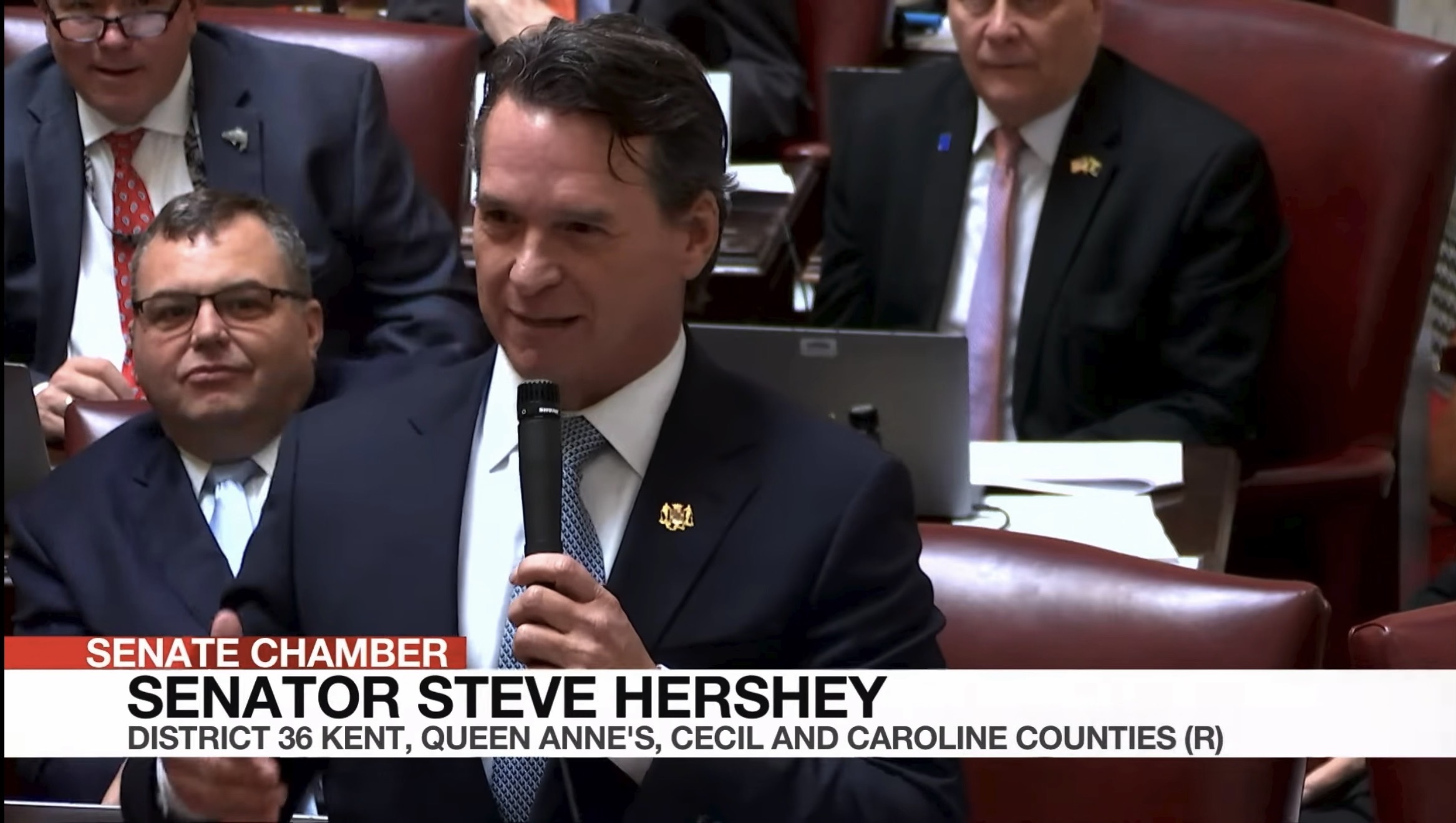
During consideration of legislation establishing a blockchain and cryptocurrency task force in Maryland, Senate Minority Leader Steve Hershey proposed ensuring bipartisan participation by recommending that a Senator from them minority party serve as a member of the task force as well.
Bringing experienced legislators from both sides of the aisle into the conversation helps ensure that Maryland approaches emerging technologies thoughtfully, responsibly, and with a broad range of perspectives.
Maryland’s Strong Academic Research Community
Maryland is fortunate to be home to several universities conducting research related to blockchain, cybersecurity, and financial technology.
These institutions include:
University of Maryland, College Park– Researchers explore blockchain systems, cybersecurity, and distributed computing within engineering and computer science programs.
Johns Hopkins University – Known globally for pioneering research in cryptography and privacy technologies that underpin many blockchain systems.
University of Maryland, Baltimore County – A nationally recognized leader in cybersecurity research with growing interest in distributed ledger technologies.
Morgan State University – Expanding research initiatives in emerging technologies and financial innovation.
The work taking place at these institutions demonstrates that Maryland is already contributing to the research and talent pipeline supporting the future digital economy.
Learn More About Digital Asset Policy
Digital asset technology continues to evolve rapidly. For individuals interested in learning more about digital asset policy and how Americans are engaging with the issue, organizations such as Stand With Crypto provide educational resources and information about the growing digital asset ecosystem.