Commentary: The Baltimore Sun: 2026-6-23
Steve Hershey: Moore didn’t save the Preakness. He bought the risk. | GUEST COMMENTARY
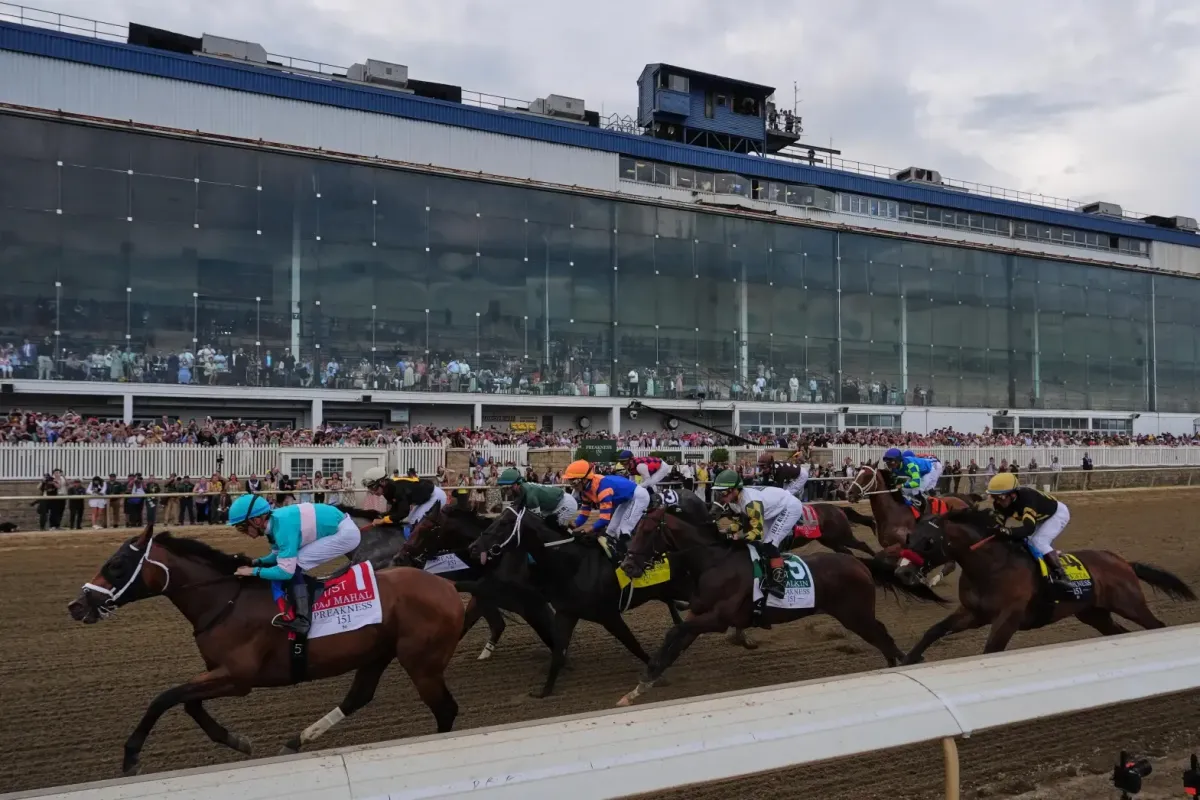
Horses compete during the 151st running of the Preakness Stakes horse race, Saturday, May 16, 2026, at Laurel Park in Laurel, Md. (AP Photo/Julia Demaree Nikhinson)
PUBLISHED: June 23, 2026 at 2:44 PM EDT
There is no question that the Preakness Stakes is one of Maryland’s most cherished traditions. It is an iconic sporting event, an important economic driver and a source of pride for generations of Marylanders.
Preserving the Preakness in Maryland is a goal that enjoys broad bipartisan support.
The question was never whether the Preakness should remain in Maryland.
The question was how best to accomplish that goal.op Videos At least one killed in shooting at California World Cup fan zone
Unfortunately, Gov. Wes Moore chose the most politically attractive option rather than the most financially responsible one.
The governor recently celebrated Maryland’s decision to spend $85 million to acquire the intellectual property rights associated with the Preakness and Black-Eyed Susan Stakes. Once financing costs are included, the state could ultimately be responsible for nearly $200 million related to this acquisition.
The administration has portrayed this as a historic victory. But before Marylanders celebrate, they should ask a simple question: What exactly has changed?
The Preakness was already being run in Maryland. The race has been held here for 151 years. Churchill Downs Incorporated, which owns the Kentucky Derby and has decades of experience operating premier racing events, was not publicly threatening an imminent move of the Preakness out of state.
Yet, the governor presented Marylanders with a false choice: either spend tens of millions of dollars to acquire the intellectual property rights or risk losing the race entirely.
That was never the only option.
In 2024, the governor celebrated the Board of Public Works decision to lease the Preakness intellectual property rights from the Stronach Group.
Now, barely two years later, Marylanders are being asked to spend tens of millions of additional dollars to solve a problem that was entirely foreseeable when that original deal was approved.
That raises an obvious question: If owning the intellectual property rights was so critical to preserving the future of the Preakness, why wasn’t that secured when the state negotiated the original transaction?
Also, given the leverage Maryland possessed through existing law, taxpayers deserve a fuller explanation of how this financial commitment was determined, if appraisals were done and whether less costly alternatives were available.
Maryland had an opportunity to pursue a long-term partnership with Churchill Downs Incorporated, arguably the most experienced racing and event-management organization in the country. Instead, the state chose to assume the financial risk itself.
Supporters of the deal argue that Maryland now controls its own destiny.
But ownership alone does not create profitability.
The challenge facing Maryland horse racing has never been who owns the Preakness trademark. The challenge has been maintaining a sustainable business model in an industry facing declining attendance, changing consumer habits and increasing competition for entertainment dollars.
In fact, one of the most troubling questions surrounding this transaction remains unanswered: How will the debt be paid?
Industry observers have noted that revenues generated by the Preakness have not consistently produced significant profits in recent years.
There is little evidence that the newly created nonprofit Maryland Jockey Club will be able to market, promote and grow the event more successfully than prior operators, and certainly no evidence that it can outperform Churchill Downs Incorporated.
Debt service comes first. If the Maryland Jockey Club finds itself struggling to meet its obligations, pressure will inevitably build to draw from racing purse accounts, reducing incentives for horse owners and trainers to race in Maryland.
And if that happens, what comes next?
Will Maryland horse racing become less competitive?
Will racing participation decline?
Will the same officials celebrating today eventually return to the General Assembly asking taxpayers for additional funding to protect the state’s enormous investment in Pimlico and Laurel?
Those are not hypothetical questions. They are predictable consequences that deserve answers before, not after, the bills come due.
Meanwhile, Maryland taxpayers are already committed to decades of debt payments associated with the redevelopment of Pimlico and Laurel Park. The state has now layered an additional financial obligation onto an industry that remains under economic pressure nationwide.
Good business leaders understand the difference between acquiring an asset and acquiring a liability.
The governor’s announcement focused on ownership. It said little about profitability, cash flow, risk management or long-term sustainability.
Those are the questions that determine whether an investment succeeds or fails.
I sincerely hope this arrangement succeeds. Every Marylander should.
But hope is not a business strategy.
The governor may have secured a headline declaring that he “saved the Preakness.” What he has not yet demonstrated is how this deal strengthens Maryland horse racing for the next generation without exposing taxpayers to additional financial risk.
In the years ahead, that distinction may prove to be far more important than the press release.
Sen. Steve Hershey ([email protected]) is the Senate minority leader in the General Assembly and represents District 36 on the Upper Eastern Shore (Caroline, Cecil, Kent and Queen Anne’s counties). He lives in Queenstown. Originally posted in The Baltimore Sun: https://www.baltimoresun.com/2026/06/23/steve-hershey-wes-moore-preakness/


