Senate Bill 875 - 3-10-2026
Senate Bill 875 Proposes Rotational Oyster Harvest Pilot for the Chesapeake Bay
Maryland’s oyster industry has long been a defining part of the Chesapeake Bay’s culture, economy, and environmental health. For generations, Maryland watermen have helped sustain coastal communities while harvesting one of the Bay’s most iconic natural resources.
Protecting that heritage requires thoughtful, science-based management that supports both restoration efforts and the hardworking watermen who depend on the Bay.
That is why Senate Minority Leader Steve Hershey and Maryland Senate Republicans have introduced Senate Bill 875, legislation that would create a rotational oyster harvest pilot program in the Chesapeake Bay. The Senate will hold a hearing on the bill this week.
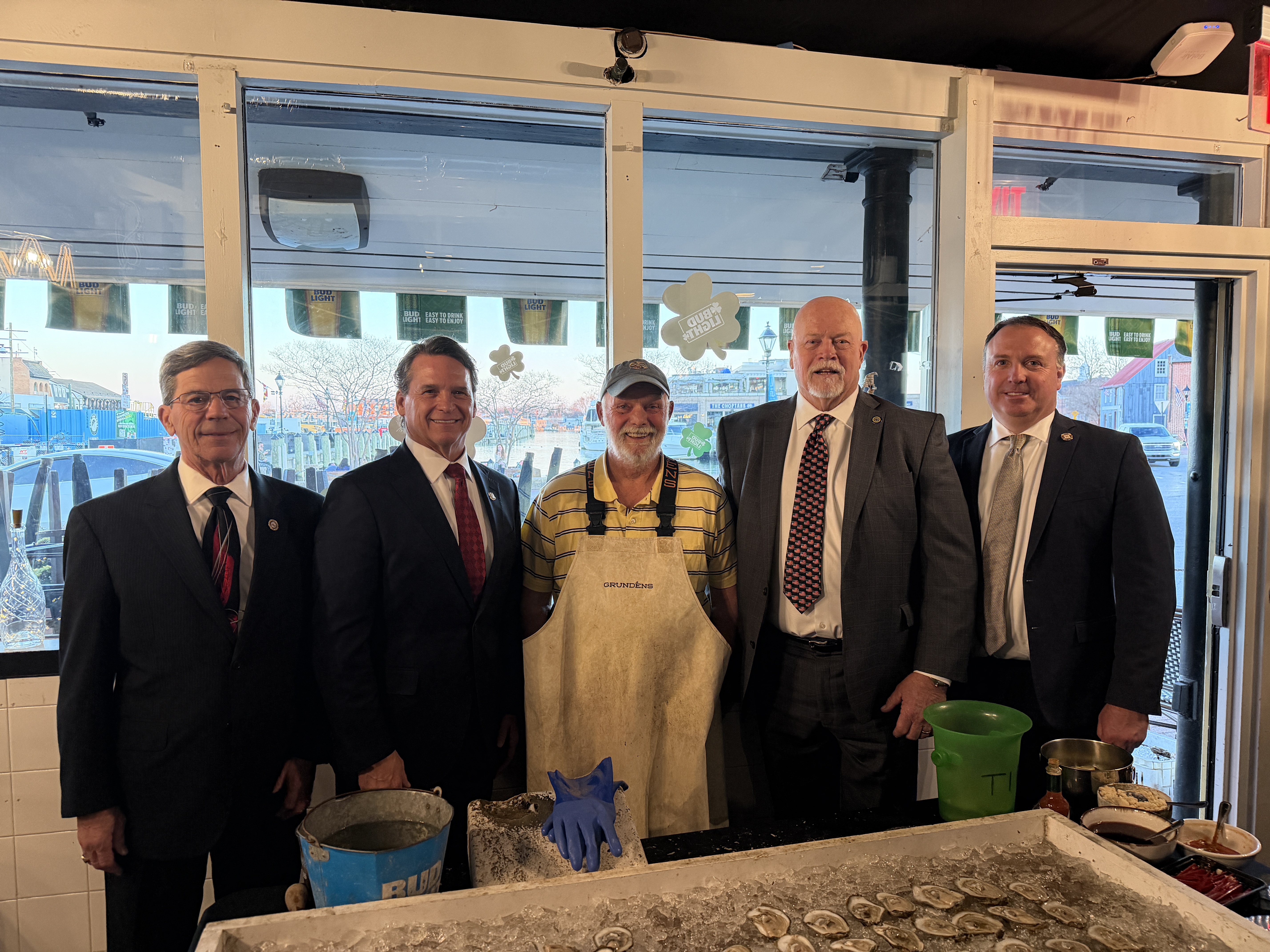
Pictured: Delegate Jay Jacobs, Senator Steve Hershey, Waterman Jamie, Delegate Steve Arentz, Delegate Jefferson Ghrist at a District 36 fundraiser at Market House in Annapolis.
A New Approach to Oyster Management
Senate Bill 875 proposes testing a management strategy used successfully in other fisheries: rotational harvesting.
Under the pilot program, certain oyster bars would be opened and closed on a rotating basis. This approach allows time for oyster populations and reef structures to recover between harvest periods while still supporting responsible harvesting.
The program would also include continued monitoring of reef health and water quality to ensure that the strategy supports long-term sustainability.
By rotating harvest areas instead of keeping them open continuously, the goal is to strengthen oyster populations while maintaining a productive fishery.
Supporting Maryland Watermen
For many Maryland families, working on the water is more than a job—it is a tradition that has been passed down for generations.
Senator Hershey and Senate Republicans say the goal of the legislation is to support Maryland watermen and the coastal communities that depend on the seafood industry while ensuring responsible stewardship of the Bay’s natural resources.
A stable and sustainable oyster fishery is essential not only for watermen, but also for Maryland’s broader coastal economy.
Rebuilding Oyster Reefs
The pilot program would also require that shells from harvested oysters be returned to the same oyster bars where they were taken.
This shell recycling is critical to rebuilding oyster reefs. Oyster larvae need hard surfaces—like shells—to attach to as they grow. Returning shells to the reefs helps create the habitat needed for new oysters to develop.
Over time, this process can help strengthen reef structures and support natural oyster reproduction.
Protecting the Chesapeake Bay
Oysters play a vital role in the Chesapeake Bay ecosystem. As natural filter feeders, they help improve water quality by removing algae and sediment from the water.
Healthy oyster reefs also provide habitat for fish, crabs, and other marine species that rely on the Bay.
By testing innovative management strategies through a pilot program, Maryland lawmakers hope to find ways to protect the Bay while ensuring the long-term viability of the oyster industry.
Looking Ahead
Maryland’s oyster fishery is one of the most historic in the country. Ensuring its future will require policies that reflect both modern science and the realities facing Maryland’s watermen.
Through Senate Bill 875, Senator Hershey and Senate Republicans are working to explore new management approaches that protect the Chesapeake Bay while supporting the communities that depend on it.
The Senate committee will consider the legislation during the upcoming hearing as lawmakers continue discussions about the future of Maryland’s oyster fishery.